Skip to content
No results
  • About Us
    • Anti Termite Treatment (Post & Pre – Construction)
    • Crawlguard Service for Cockroaches, Ants and crawling insects
    • Integrated Flies Management
    • Integrated Rat Management ( For Rodents)
  • Blog
  • Cart
  • Checkout
  • Choose Us for Effective Pest Control Solutions
  • Client 5
  • Clients
    • Client 1
    • Client 2
    • Client 3
    • Client 4
  • Contact
  • Contact Information
  • Featured Slider
    • Commercial Pest Management
    • Residential Pest Control
    • Termite Inspection and Control
  • Home Page
  • HomePage
  • Make a Call
  • My Account
  • Privacy Policy
  • Shop
  • Testimonial
    • Anupam Singh
    • Prateek Singh
    • Ravi Singh
  • Thank You
  • Your Gateway to Valuable Sites
    • Valuable Sites1
    • Valuable Sites2
    • Valuable Sites3
    • Valuable Sites4
  • Ammit Banjan
  • Lolita Maan
  • Royal Roye
  • Sambriddhi Parl
greentrack-logo
Greentrack
  • Home
  • About Us
  • Services
  • Testimonials
  • Process
  • Contact
greentrack-logo
Greentrack
  • Blog

Monsoon Pest Season: Why Cockroaches, Ants and Termites Thrive During Rains

Monsoon Pests: Why Cockroaches, Ants and Termites Thrive

Every year, around the time the first heavy rains reach Lucknow and Kanpur, the same calls start coming in. Cockroaches are suddenly in the bathroom. A line of ants runs along the kitchen skirting. Someone finds a thin mud tube…


  • Bhupendra Singh Parihar
  • November 10, 2026
  • Blog

Preventing Rodent Entry in Winter: Rat Proofing Guide

Preventing Rodent Entry in Winter Why Rats Head Indoors and How to Stop Them

Introduction Most people don’t notice rodents until they’ve already moved in. A scratching sound in the ceiling at night, a few droppings behind the kitchen cupboard, a chewed packet of dal in the store room. By then, the rats may…

  • Bhupendra Singh Parihar
  • October 26, 2026
  • Blog

How to Cockroach-Proof Your Kitchen: A Prevention Checklist That Actually Works

How to Cockroach-Proof Your Kitchen A Prevention Checklist That Actually Works

Introduction You keep your kitchen clean. Counters are wiped down daily. Dishes are washed immediately. Floors are swept and mopped. Food is stored in cupboards. Yet you still see cockroaches—usually at night, sometimes during the day. This is the most…

  • Bhupendra Singh Parihar
  • October 5, 2026
  • Blog

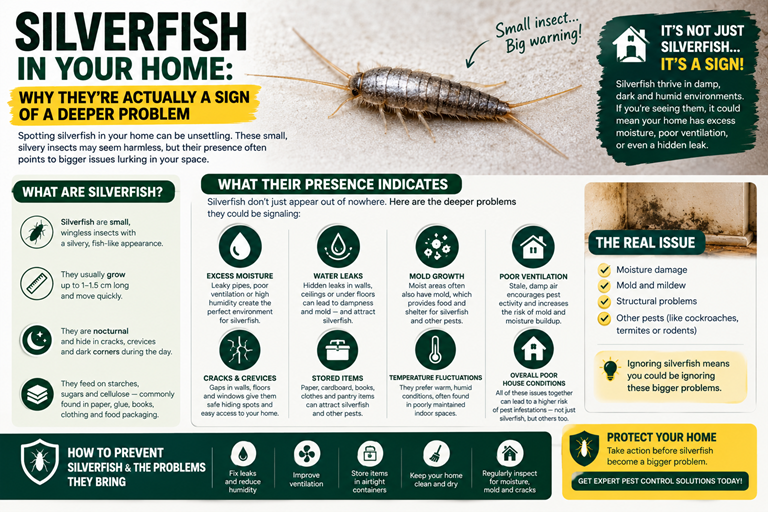
Silverfish in Your Home Why They’re Actually a Sign of a Deeper Problem

Introduction You find a small, silvery insect moving quickly across your bathroom floor or inside a cupboard. It's fast, moving in a distinctive side-to-side motion. If it disappears before you can get a better look, you might dismiss it—a random pest that found its way inside. If you see them regularly—in the bathroom, near the kitchen, in closets, or in storage areas—it means something else: your home has an environment that silverfish find attractive. Silverfish are often overlooked as minor household pests. They're not aggressive, they don't bite, and they're usually seen only occasionally. Many homeowners tolerate them without recognizing what their presence actually indicates. That's a mistake. Silverfish are indicators of something wrong with your home—typically a moisture or humidity problem that, if left unaddressed, can lead to larger pest issues and structural damage. Understanding what silverfish reveal about your home is more important than killing the individual insects you see. ________________________________________ What Silverfish Actually Are Silverfish (family Lepismatidae) are small, wingless insects that thrive in specific environmental conditions. Common species in Indian homes include Lepisma saccharina (the common silverfish) and Ctenolepisma longicaudata (the banded silverfish). They're not destructive in the way termites or wood-boring beetles are. They don't carry disease. They're not dangerous to humans. But they're extremely efficient at exploiting the exact conditions that indicate moisture problems in homes. Silverfish are primarily nocturnal. You rarely see them during the day—which is why many homeowners are unaware of how many are actually present. If you're seeing them regularly during daylight hours, the population is likely substantial. They live 2-8 years, depending on conditions. A single female can produce thousands of offspring across her lifetime. This means a few silverfish you see today could represent a significant population in a few months. ________________________________________ Humidity: The Primary Indicator Silverfish are moisture-dependent insects. They cannot survive in dry environments. They require humidity levels of at least 75-80% to reproduce and thrive. If silverfish are present in your home, your home has persistent humidity or moisture problems. This is the key point many homeowners miss: The presence of silverfish is diagnostic. It tells you something is wrong with moisture control, not just that a random pest found its way inside. Common sources of persistent humidity in Indian homes: Bathroom moisture — Bathrooms are the most common silverfish location because bathrooms naturally accumulate moisture. Shower steam, wet floors, and inadequate ventilation create ideal conditions. If you're seeing silverfish regularly in your bathroom, you have a humidity problem—either the bathroom isn't drying properly after use, or there's moisture accumulation that never fully dries. Kitchen moisture — Areas around sinks, under-counter leaks, or poorly ventilated cooking areas accumulate moisture. Silverfish often appear near kitchens when there's hidden water accumulation—under the sink, inside cabinets, or in wall cavities. Basement or ground-floor moisture — In older homes or those with water seepage issues, basements are prime silverfish habitat. Moisture from the ground migrating into basement walls creates perfect conditions. Finding silverfish in basements often indicates water infiltration that should be addressed. Monsoon-related moisture — During and after monsoon season in Uttar Pradesh, humidity levels spike throughout homes. Many homeowners notice silverfish appearing or increasing during this period. This is expected—the humidity is higher. But if silverfish persist after monsoon ends and humidity normalizes, it suggests the home retains moisture or has an ongoing water issue. Laundry or storage areas — Rooms where clothes are dried indoors or where items are stored in humid conditions attract silverfish. Poor ventilation in these areas combined with moisture from fabrics creates ideal habitat. The presence of silverfish essentially tells you: "There is an area of your home where humidity remains consistently high." ________________________________________ Starch Sources: Why Silverfish Settle While humidity is the primary requirement, silverfish also need food. Their diet consists primarily of starches and carbohydrates. Common food sources in homes: • Paper (including books, documents, wallpaper) • Cardboard (boxes, storage containers) • Dried foods (flour, grains, cereals) • Fabric with starch sizing • Adhesives and glue (often made from starch) • Bookbindings and paper products Silverfish are often found in cupboards, storage areas, and closets because these locations combine humidity, darkness, and food sources. They're attracted to starch-containing items and can cause damage to books, documents, and stored fabrics over time. In Indian homes, silverfish commonly establish in: • Storage cupboards in kitchens (starch and humidity from cooking) • Bedroom closets (fabric, darkness, and accumulated moisture) • Areas where books or papers are stored (starch in paper and bindings) • Under-sink cabinets (moisture + potential food sources) If you're finding silverfish consistently in a particular location, that location has both persistent moisture and available starches. Addressing only the moisture will reduce numbers, but removing the food source (or at least making it less accessible) is equally important. ________________________________________ Harbourage: Where Silverfish Hide Silverfish are cryptic. They hide in tight spaces during the day and forage at night. Understanding their harbourage helps explain why you might see them occasionally but not realize how many are present. Ideal silverfish harbourage includes: • Cracks and crevices in walls or around baseboards • Gaps behind cupboards or under countertops • Inside wall cavities where pipes run (pipes accumulate condensation, creating moisture) • Behind wallpaper or within damaged plaster • Inside cardboard boxes or storage containers • Beneath loose floorboards or in crawl spaces • Inside foam insulation (if it's damaged or exposed) Silverfish prefer tight spaces where they're protected from light and disturbance. A single silverfish you see crossing the bathroom floor may be just one individual from a population hiding in cracks, under cabinets, or inside walls. This is why treating only visible silverfish is ineffective. The population remains hidden, and new individuals continue to forage at night. Even if you kill several silverfish, dozens more may remain in harbourage areas. ________________________________________ What Silverfish Reveal About Your Home The presence of silverfish is essentially a moisture audit. It tells you where humidity problems exist. Regular silverfish in the bathroom suggests: • Poor bathroom ventilation • Moisture that doesn't dry properly after showers • Possible water leakage from plumbing inside walls • Inadequate exhaust fan operation or installation Silverfish in the kitchen suggests: • Moisture accumulation from cooking or water use • Leaking pipes under sinks or inside cabinets • Poor ventilation removing cooking moisture • Water accumulation in walls where utilities run Silverfish in bedrooms or living areas suggests: • General home humidity (poor air circulation, high ambient moisture) • Possible water seepage or moisture infiltration • Humidity from indoor laundry drying Silverfish in basements or ground floors suggests: • Water infiltration from the ground or foundation • Poor drainage around the home • Rising damp or capillary moisture • Inadequate waterproofing In Lucknow and Kanpur, where monsoon brings extended humidity, silverfish populations often increase during rainy season. If they disappear after monsoon ends, the issue is seasonal humidity. If they persist or remain numerous year-round, the home has an underlying moisture problem that exists regardless of season. ________________________________________ Seasonal Patterns in Indian Homes Silverfish activity in North India follows seasonal humidity patterns. Monsoon (June-September): Silverfish populations spike because humidity throughout homes increases. Moisture seeps into walls, condensation accumulates, and storage areas become damp. If your home is well-ventilated and dries quickly after rains, silverfish may decrease. If moisture lingers, they thrive. Post-monsoon (October-November): Humidity gradually decreases, but homes retain moisture. Silverfish may remain abundant if areas remain damp. Winter (December-February): Humidity typically drops. Silverfish populations usually decline because conditions become less favorable. If silverfish persist during dry winter months, it indicates an indoor moisture problem (like a leaking pipe or persistent dampness in a specific area) rather than seasonal humidity. Summer (March-May): In some homes, summer humidity from air conditioning or from buildings that don't dry well can support silverfish. In well-ventilated homes, populations usually decline. ________________________________________ Why Silverfish Matter Beyond the Pest Itself Silverfish don't damage homes the way termites do, and they're not disease vectors like cockroaches. But their presence indicates conditions that support other pest problems and can cause structural damage. Moisture attracts other pests: Cockroaches, ants, and other moisture-loving insects are often found in the same areas as silverfish. If you have silverfish, you likely have conditions attracting other pests too. Moisture damages structures: Persistent moisture leads to mold, mildew, wood rot, and structural degradation. Silverfish are just the visible indicator of a larger problem. Moisture increases other infestations: High humidity and moisture are ideal for wood-boring insects, termites, and fungal issues. Addressing moisture early prevents more serious problems later. ________________________________________ What You Can Do Start by identifying where you're seeing silverfish. This is your moisture map. Reduce humidity: • Improve bathroom ventilation (run exhaust fans during and 20-30 minutes after showers) • Ventilate cooking areas properly • Ensure laundry dries in well-ventilated spaces • Use dehumidifiers in consistently damp areas • Improve air circulation with fans Remove food sources: • Store starches (flour, grains, cereals) in sealed containers • Store books and documents in dry areas with good air circulation • Avoid stacking cardboard boxes; store items in sealed plastic containers instead • Remove old papers, books, or items you don't need Seal harbourage: • Caulk cracks and crevices in walls and around baseboards • Seal gaps behind cupboards and under countertops • Address damaged plaster or gaps where pipes enter Fix moisture sources: • Repair leaking pipes under sinks and inside cabinets • Ensure gutters and downspouts direct water away from the home • Check for water seepage or dampness in basements • Improve drainage around the foundation if water accumulation occurs after rain ________________________________________ When Professional Assessment Is Needed If silverfish persist despite efforts to reduce humidity and remove food sources, the problem likely involves: • Hidden water leaks inside walls • Structural moisture problems requiring professional assessment • Ventilation systems that aren't functioning properly • Foundation or water-infiltration issues needing specialist input A professional pest-management inspection can identify where populations are concentrated, what specific moisture issues are supporting them, and whether treatment is needed while the underlying moisture problem is being addressed. In Kanpur, Lucknow, and Jhansi, older homes often have moisture-related issues that aren't obvious during normal inspection. Professional assessment can identify these problems before they lead to structural damage or larger pest infestations. ________________________________________ Conclusion Silverfish are often dismissed as minor household pests. In reality, they're indicators. Their presence tells you something is wrong with moisture control in your home. Rather than focusing on killing individual silverfish, the real solution is identifying what moisture problem they're revealing and addressing that underlying issue. Once you reduce humidity to unsuitable levels, silverfish populations naturally decline—without needing extensive treatment. If silverfish activity is persistent and reducing humidity hasn't helped, the problem likely involves hidden moisture issues that benefit from professional assessment. At Green Track Pest Control, we work with homeowners across Lucknow, Kanpur, and Jhansi to identify moisture-related pest problems and develop practical solutions. If silverfish are appearing regularly in your home, start by identifying the moisture source. That's usually where the real problem lies.

Introduction You find a small, silvery insect moving quickly across your bathroom floor or inside a cupboard. It’s fast, moving in a distinctive side-to-side motion. If it disappears before you can get a better look, you might dismiss it—a random…

  • Bhupendra Singh Parihar
  • September 26, 2026
  • Blog

How Flies Get Into Food Businesses: Understanding the Real Entry Points

How Flies Get Into Food Businesses: Understanding the Real Entry Points

Introduction You run a clean restaurant, hotel, or food business. Your kitchen is sanitized daily. Floors are swept and mopped. Waste is disposed of properly. Food is stored correctly. Yet despite all this, you still find flies—sometimes more during certain…

  • Bhupendra Singh Parihar
  • September 21, 2026
  • Blog

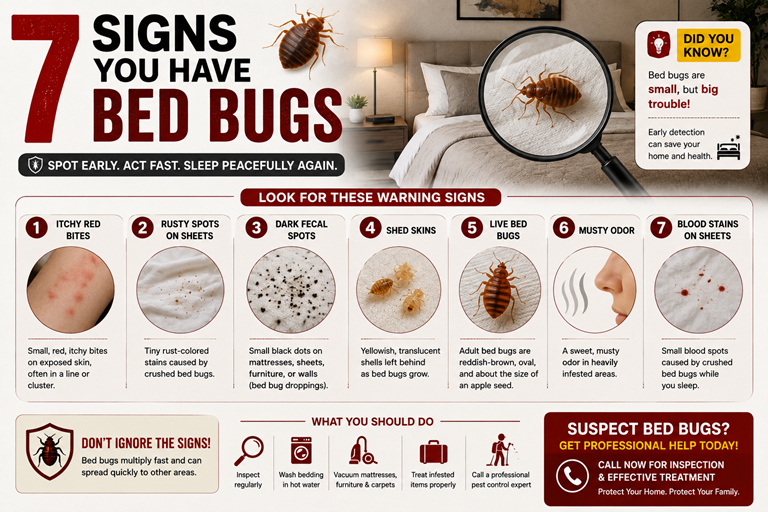
7 Signs You Have Bed Bugs: How to Spot an Infestation Early

7 Signs You Have Bed Bugs

You wake up with a few itchy red spots on your skin. You change the bedsheet, wash your clothes, and assume it was probably a mosquito. Then it happens again. And again. If you’re waking up with unexplained bites, noticing…

  • Bhupendra Singh Parihar
  • August 29, 2026
  • Blog

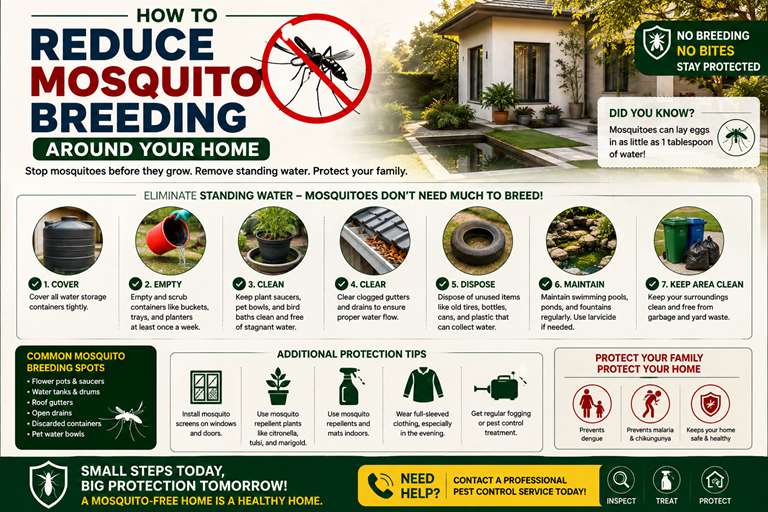
How to Reduce Mosquito Breeding Around Your Home: A Complete Prevention Guide

How to Reduce Mosquito Breeding Around Your Home A Complete Prevention Guide

Introduction Mosquitoes may be tiny, but they can quickly become a major problem around your home. A few mosquitoes in the evening can turn into a persistent infestation when suitable breeding conditions are available. The important thing to understand is…

  • Bhupendra Singh Parihar
  • August 17, 2026
  • Blog

Signs You Have Rats or Mice in Your Home

Signs You Have Rats or Mice in Your Home

Signs You Have Rats or Mice in Your Home: 12 Warning Signs You Should Never Ignore Introduction Have you ever heard scratching noises in the middle of the night or discovered tiny black droppings in your kitchen? These may seem…

  • Bhupendra Singh Parihar
  • August 1, 2026
  • Blog

Why Cockroaches Keep Coming Back After Spraying: 10 Hidden Reasons Homeowners Overlook

Why Cockroaches Keep Coming Back After Spraying

  You’ve sprayed the kitchen. Cleaned every corner. Watched the cockroaches disappear for a few days—and then, almost as if nothing happened, they’re back. If this sounds familiar, you’re not alone. One of the most common questions homeowners ask is,…

  • Bhupendra Singh Parihar
  • July 25, 2026
  • Blog

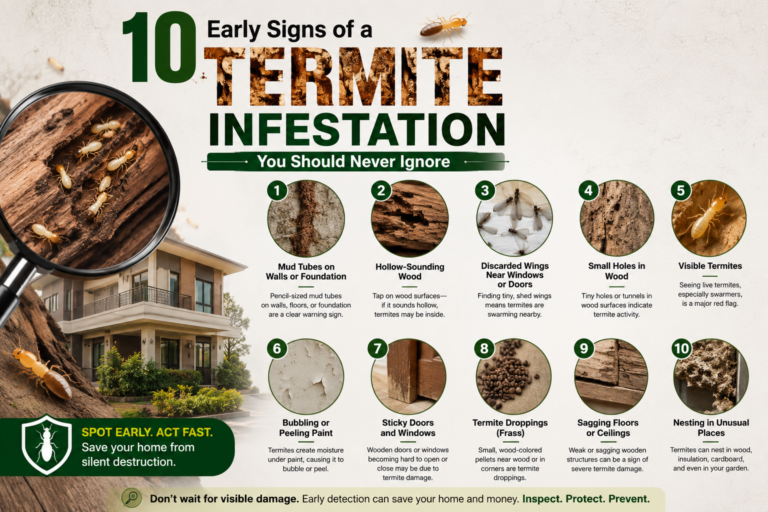
10 Early Signs of a Termite Infestation You Should Never Ignore

10 Early Signs of a Termite Infestation You Should Never Ignore

Introduction Imagine investing years of hard work into building your dream home or growing your business, only to discover that termites have been silently damaging the structure from within. Unlike other household pests that announce their presence, termites work quietly,…

  • Bhupendra Singh Parihar
  • July 21, 2026
1 2
Next
Copyright © 2026 - WordPress Theme by CreativeThemes